Source mirror polish piano hinge for doors, cabinets, and furniture
Compare 30 listings for mirror polish piano hinge options suitable for wooden doors, cabinets, and general furniture applications. Buyers can evaluate specifications like size, material, and finish to find the right fit for their projects.
Key considerations
Products List




Comprehensive Sourcing Guide
Strategic Sourcing Guide for Mirror Polish Piano Hinges
Understanding Product Definitions and Material Variations
When initiating a procurement strategy for mirror polish piano hinges, buyers must first navigate the complex landscape of product definitions and material specifications found in current market listings. The core keyword "mirror polish piano hinge" implies a specific aesthetic finish characterized by a highly reflective, smooth surface that eliminates visible grain or texture. However, an analysis of available product data reveals a significant divergence in material composition that directly impacts the feasibility of achieving this finish. While some listings explicitly identify the material as "Stainless steel," others list "Iron" or "Good Steel" as the base composition. This distinction is critical because stainless steel is the preferred substrate for mirror polishing due to its inherent corrosion resistance and ability to hold a high-gloss finish without rapid degradation. Iron-based hinges, even when plated, may require more rigorous surface preparation to achieve a true mirror effect and are generally more susceptible to rust if the plating is compromised.
The supply chain data indicates that the "Stainless steel long piano hinge" is a primary offering, with specific model numbers such as N9403 and 1526 appearing in various contexts. Buyers should note that while the finish is described as "Zinc Plated" or "Nickel Plated" in some entries, and "Brass Plated" in others, the term "mirror polish" often refers to the mechanical polishing of the substrate prior to or after plating. The presence of "Silver" and "Brass Plated" color options suggests that the final visual outcome depends heavily on the plating layer applied over the polished base. A procurement strategy must therefore prioritize verifying the base material grade. If the listing specifies "Iron," the buyer must confirm whether the mirror finish is a result of the plating alone or if the iron has been mechanically polished to a high sheen, as the latter is less common for standard iron products due to cost and durability concerns.
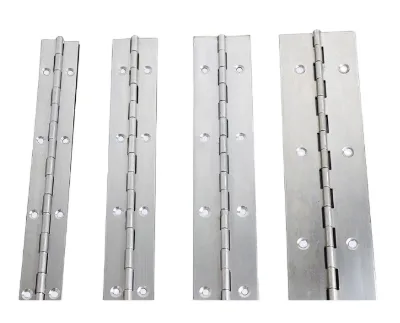
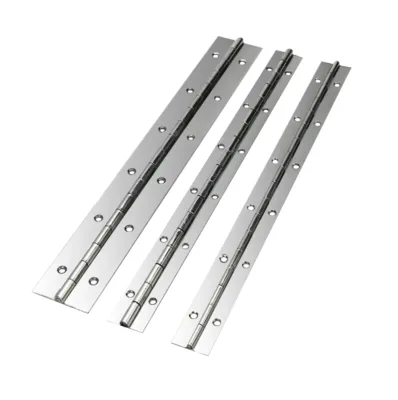
Furthermore, the physical dimensions vary significantly across the market. Listings show sizes ranging from 3 inches to 5 inches, with specific metric measurements like 1020mm, 1800mm, and 2000mm available. The thickness is a crucial technical parameter, with observed values such as 2.5mm and 1.2mm. A mirror polish finish on a thin 1.2mm hinge may be more prone to warping or visible imperfections compared to a thicker 2.5mm counterpart. The "Single package size" of 32x26x18 cm and a "Single gross weight" of 23.000 kg indicate that these are heavy-duty items, likely intended for commercial or industrial applications rather than light residential use. Buyers must align their required hinge length and thickness with the specific aesthetic and structural demands of their project, ensuring that the mirror polish does not compromise the structural integrity of the thinner variants.
Technical Specifications and Dimensional Standards
The technical architecture of a piano hinge, also known as a continuous hinge, is defined by its length, leaf width, and pin configuration. In the context of mirror polish finishes, the dimensional consistency is paramount because any deviation in the leaf width or thickness can disrupt the uniformity of the reflective surface. The observed data presents a range of standard sizes, including 3", 4", and 5" options, alongside metric equivalents like 1020mm. The specification "2.5#(65mm)" suggests a specific gauge or width classification that buyers should verify against their design blueprints. The "Thickness" of 2.5mm represents a robust construction suitable for heavy-duty applications, whereas the 1.2mm specification points to lighter duty usage.
The hinge type is another critical technical variable. Listings mention "90°Hinge" and "180°Hinge" classifications, indicating the range of motion. A standard piano hinge typically allows for a 180-degree opening, which is essential for doors that need to swing fully flat against a frame. However, the presence of "90°Hinge" in the data suggests that some suppliers may offer limited-angle variants or that the terminology is being used to describe the leaf design rather than the functional range. Buyers must explicitly confirm the opening angle to ensure compatibility with their door or cabinet mechanisms. Additionally, the "Angle" of 95-100° mentioned in the data may refer to the leaf opening angle or the clearance angle, which affects how the hinge sits when the door is closed.
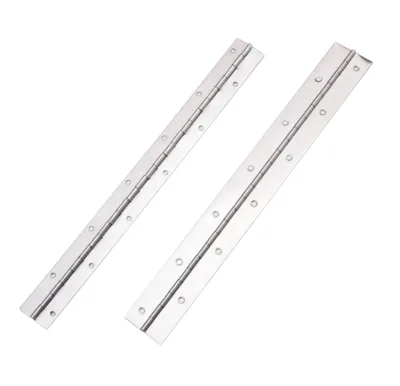
The pin and leaf design also influence the final appearance and performance. The "Head" of the hinge is described as "Flat/Crown/Ball/Tower/etc," which refers to the shape of the knuckle or the end of the hinge. For a mirror polish application, a "Flat" or "Crown" head is typically preferred to maintain a sleek, uninterrupted line. The "Hole" specification, noted as "With Hole," indicates pre-drilled mounting points, which is standard for installation but requires verification of hole spacing and diameter to match the buyer's existing hardware or new fabrication. The "Fixed" status is listed as "Unfixed," implying that the hinge is supplied in a disassembled state or requires assembly, which is common for long piano hinges to facilitate shipping and handling. The "Disassembly" feature confirms that the hinge can be taken apart, a vital characteristic for maintenance or replacement of the pin without removing the entire hinge from the door frame.
Compliance, Certification, and Finish Verification
In the realm of high-end hardware, compliance and certification serve as the primary indicators of quality and safety, particularly for products intended for public or commercial spaces. The observed data includes a low-confidence mention of "CE" certification. Buyers should approach this with caution, as the presence of a CE mark does not automatically guarantee that the specific mirror polish finish meets all relevant safety or environmental standards. The CE mark generally indicates conformity with health, safety, and environmental protection standards for products sold within the European Economic Area, but it does not specifically validate the aesthetic quality of a mirror polish.
For mirror polish piano hinges, the most critical compliance checks revolve around the plating and coating processes. The data lists "Zinc Plated," "Nickel Plated," and "Brass Plated" finishes. Each of these plating types has different environmental and safety implications. Nickel plating, for instance, is often subject to strict regulations regarding hexavalent chromium content, which is a known carcinogen. Buyers must request specific test reports or Material Safety Data Sheets (MSDS) to verify that the plating process adheres to current environmental standards, such as RoHS (Restriction of Hazardous Substances) or REACH (Registration, Evaluation, Authorisation and Restriction of Chemicals). The "Good Steel" designation in the material list is too vague for compliance purposes; buyers should demand the specific grade of steel, such as 304 or 316 stainless steel, to ensure corrosion resistance and material safety.
Furthermore, the "Standard" field in the data lists "3.5inch, 3inch, 4inch," which appears to be a size standard rather than a regulatory one. Buyers should verify if the supplier adheres to recognized industry standards such as ANSI (American National Standards Institute) or DIN (Deutsches Institut für Normung) for hinge dimensions and load-bearing capacity. The absence of explicit certification data in the high-confidence facts means that buyers cannot assume compliance based on the product listing alone. Instead, the procurement process must include a formal request for certification documents from the supplier. This is particularly important for projects in regulated industries like healthcare, education, or public transportation, where fire ratings and material safety are mandatory.
Cost Drivers and Economic Factors in Procurement
The economic landscape for sourcing mirror polish piano hinges is influenced by several distinct cost drivers, primarily material composition, finishing processes, and order volume. The observed price range of $0.05 to $10.6 USD per unit represents a massive variance, reflecting the difference between basic iron hinges with simple plating and high-grade stainless steel units with complex mirror polishing. The lower end of this range likely corresponds to the "Iron" or "Good Steel" variants with standard plating, while the higher end is reserved for stainless steel products with premium finishes.
Material costs are the most significant factor. Stainless steel is inherently more expensive than iron, and the specific grade (e.g., 304 vs. 316) further influences the price. The "Mirror polish" finish adds a substantial processing cost, as it requires multiple stages of grinding, buffing, and polishing to achieve the desired reflectivity. This labor-intensive process is often the primary driver behind the higher price points. Additionally, the plating process adds another layer of cost. Nickel plating is generally more expensive than zinc plating due to the material cost and the complexity of the electroplating bath required.
Order volume plays a crucial role in determining the final unit price. The observed Minimum Order Quantity (MOQ) ranges from 100 to 10,000 units. Suppliers with lower MOQs may charge a premium per unit to cover the setup costs for custom polishing and plating. Conversely, buyers placing orders near the upper limit of the MOQ range can often negotiate better pricing. The "Supply Ability" of 5,000,000 pieces per month indicates that the market has the capacity to handle large-scale orders, which can help stabilize prices for bulk buyers. However, buyers should be aware that customizations, such as specific lengths or unique finishes, may incur additional setup fees or require higher MOQs to be economically viable.
Logistics and packaging also contribute to the total cost of ownership. The "Packing Details" of 500pcs/ctn and the "Single package size" of 32x26x18 cm suggest that these items are heavy and require careful handling. The "Single gross weight" of 23.000 kg per package highlights the need for robust shipping solutions, which can increase freight costs. Buyers should factor in the cost of protective packaging to prevent damage to the mirror finish during transit, as scratches or dents can render the product unusable. The "Delivery" time of "Within 30days" is a standard lead time, but rush orders or customizations may extend this period, potentially impacting project timelines and overall costs.
Typical Applications and Industry Use Cases
The versatility of mirror polish piano hinges makes them suitable for a wide array of applications, ranging from residential cabinetry to commercial architectural features. The "Usage" field in the data lists "Wooden Door," "Door/Window," and "Furniture," indicating their broad applicability. In residential settings, these hinges are often used in high-end cabinetry, glass doors, and luxury furniture where aesthetics are as important as functionality. The "Hydraulic Cabinet Hinge" and "Hydraulic" style mentioned in the data suggest that some variants are designed for soft-close mechanisms, which are popular in modern kitchen and bathroom cabinetry.
In commercial and industrial applications, the "Heavy duty" feature and the "Stainless steel" material make these hinges ideal for high-traffic areas. Airports, hospitals, and office buildings often require hinges that can withstand frequent use and maintain their appearance over time. The "Smooth movement" attribute is particularly valuable in these environments, ensuring that doors operate quietly and efficiently. The "Disassembly" feature allows for easy maintenance and replacement, which is a critical consideration for facilities with strict operational schedules.
The "Design" attribute, stating "All Designs Available," suggests that suppliers can accommodate custom architectural requirements. This flexibility is essential for projects with unique design constraints, such as curved doors or specialized framing systems. The "OEM" and "Customization" options further expand the potential use cases, allowing buyers to tailor the hinge to specific brand requirements or design specifications. The "Color" options, including "Silver" and "Brass Plated," enable designers to match the hinges with other hardware elements, creating a cohesive aesthetic throughout the space.
Supplier Evaluation and Quality Control Protocols
Evaluating suppliers for mirror polish piano hinges requires a rigorous approach that goes beyond basic product listings. The "Place of origin" data points to "Guangdong, China" and "Zhejiang, China," both of which are major manufacturing hubs for hardware. While these regions have a high concentration of suppliers, the quality can vary significantly. Buyers should prioritize suppliers who demonstrate transparency in their manufacturing processes and provide detailed product specifications. The "Model number" consistency, such as N9403, 1526, 1600, and 1546, can serve as a reference point for tracking specific product lines and verifying supplier claims.
Quality control is paramount for mirror polish finishes, as even minor imperfections can be highly visible. Buyers should implement a multi-stage quality control protocol that includes pre-production sample approval, in-process inspections, and final random sampling. The "Feature" list, which includes "Smooth movement, cheap price, prompt delivery, heavy duty," provides a baseline for performance expectations, but these claims must be verified through physical testing. Buyers should request samples to test the hinge's opening and closing mechanism, checking for any binding or uneven movement that could indicate poor manufacturing.
The "Condition" of "New" and the "Customized" status are important factors in supplier selection. Buyers should ensure that the supplier has the capability to produce new, high-quality products consistently. The "Customization" availability suggests that the supplier can adapt to specific requirements, but this capability must be validated through a trial order. The "Packaging" details, such as "Polybag, Other" and "Each Set in a PP Bag, 72sets/Carton," indicate the level of protection provided. Buyers should verify that the packaging is sufficient to prevent damage during shipping, especially for delicate mirror finishes.
Long-Term Procurement and Relationship Management
Sourcing mirror polish piano hinges is not merely a transactional activity but a strategic partnership that requires long-term planning and relationship management. The "Lead time" of "Within 30days" and the "Supply Ability" of 5,000,000 pieces per month suggest that suppliers are capable of scaling production to meet fluctuating demand. However, buyers should establish clear communication channels and contract terms to ensure consistent supply and quality. The "OEM" and "Customization" options highlight the potential for a collaborative relationship, where the supplier can act as a partner in product development and innovation.
Long-term procurement considerations also include the management of inventory and the mitigation of supply chain risks. The "MOQ" range of 100 to 10,000 units requires buyers to balance inventory costs with the need for flexibility. Maintaining a relationship with a reliable supplier can help buyers navigate supply chain disruptions and secure priority production slots during peak demand periods. The "Delivery" time and "Packaging" details should be reviewed periodically to ensure they remain aligned with the buyer's logistical requirements.
Finally, the "Feature" of "Cheap price" should be interpreted with caution. While cost efficiency is important, it should not come at the expense of quality. Buyers should focus on value rather than just price, considering the total cost of ownership, including maintenance, replacement, and potential downtime. By building a strong relationship with a supplier who prioritizes quality and reliability, buyers can ensure a steady supply of high-performance mirror polish piano hinges that meet their long-term business objectives.
FAQs
What material options exist for mirror polish piano hinges?
Stainless steel is the preferred substrate for mirror polishing due to its corrosion resistance, though iron and good steel variants are also listed. Buyers must verify the base material grade to ensure the finish holds up without rapid degradation or rust.
Which plating finishes are available for these hinges?
Available plating options include zinc plated, nickel plated, and brass plated finishes. The final visual outcome depends heavily on the plating layer applied over the polished base, with silver and brass colors being common options.
How long is the delivery time for these products?
The standard delivery time is within 30 days for most orders. However, rush orders or customizations may extend this period, so buyers should confirm lead times when placing large or specialized requests.
What is the minimum order quantity for these hinges?
The minimum order quantity ranges from 100 to 10,000 units depending on the supplier and specific customization needs. Lower MOQs may incur a premium per unit to cover setup costs for custom polishing and plating.
Can these hinges be customized for specific projects?
Yes, customization is available for various specifications including size, finish, and design. Buyers should note that customizations may require higher minimum order quantities to be economically viable and could impact the final unit price.
What dimensions are available for these piano hinges?
Sizes range from 3 inches to 5 inches, with specific metric measurements like 1020mm, 1800mm, and 2000mm available. Thickness options include 1.2mm for lighter duty and 2.5mm for heavy-duty applications.